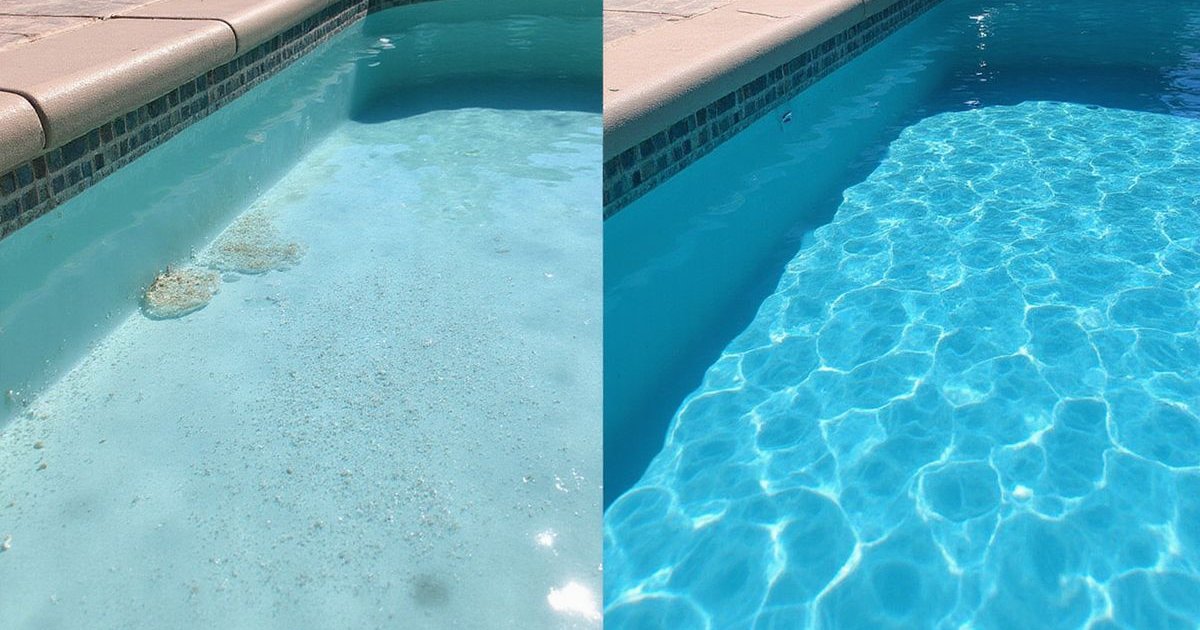
Arizona Pool Maintenance Calendar: Month-by-Month Care Guide
Keep your Phoenix pool pristine year-round. Monthly maintenance tasks, seasonal tips, and when to call the pros.
Managing a swimming pool in Phoenix is less about following a generic calendar and more about battling the elements. You likely know that what works for a pool in Ohio or Florida simply fails here in the Valley of the Sun.
David Resurface was founded with a simple mission: to provide exceptional pool remodeling and resurfacing services that customers can truly rely on. We understand that our local environment poses unique challenges.
Extreme evaporation rates and hard water create a chemistry balancing act that changes weekly. A 2025 report on local water quality indicates that Phoenix municipal water often enters your pool with a calcium hardness of 200 ppm or higher. This starting point complicates chemical management significantly.
We are going to break down exactly how to handle these variables month by month.
Here is your guide to protecting your investment and keeping your water crystal clear.
January - February: Winter Maintenance
What’s happening: Water temperatures dip below 60°F, algae growth slows, and calcification risks rise.
Weekly Tasks
- Test pH and Alkalinity: Cold water can become corrosive if pH drops below 7.2.
- Run Pump 4-6 Hours: Reduce runtime to save on electricity, as demand is low.
- Clear Skimmer Baskets: Winter winds still deposit dust and debris.
- Check PSI: Ensure filter pressure remains within 10 PSI of your clean starting pressure.
Monthly Tasks
- Inspect Equipment: Look for dry rot on O-rings caused by winter temperature fluctuations.
- Clean Salt Cells: If you have a salt system, inspect the cell for scale buildup now.
- Check Freeze Guard: Verify your automation system’s freeze protection sensor is active.
- Monitor Water Level: Rain is rare, so ensure the auto-fill is functioning.
Pro Tips
We often see homeowners ignore their pools completely during these months. This mistake usually leads to stained plaster by March.
- Watch the Calcium: Cold water hides calcium scaling until it’s too late.
- Resurfacing Window: Winter is the absolute best time for major renovations like PebbleTec or plaster work.
- Temperature Matters: Heaters struggle when air temps drop below 55°F, so plan heating cycles accordingly.
March - April: Spring Transition
What’s happening: UV index spikes, evaporation begins to accelerate, and algae wakes up.
Weekly Tasks
- Test Chlorine 2x Per Week: As water hits 65°F, chlorine consumption doubles.
- Adjust Pump Schedule: Increase runtime to 8-10 hours to ensure full turnover.
- Brush Walls: Removing microscopic biofilm now prevents full blooms later.
- Check Cyanuric Acid (CYA): This stabilizer acts as sunscreen for your chlorine.
Monthly Tasks
- Deep Clean Filters: A dirty filter significantly reduces circulation efficiency.
- Inspect Pop-Up Heads: In-floor cleaning systems often jam after a winter of low usage.
- Examine Plaster: Look for “spider cracking” or delamination on steps and benches.
- Test Total Dissolved Solids (TDS): If TDS exceeds 2,500 ppm, you might need a partial drain and refill.
Special Tasks
- Summer Chemical Stock: Buy chlorine tabs and shock before summer price hikes.
- Safety Check: Inspect gate latches and fences before swimming season officially starts.
- Leak Detection: Perform a “bucket test” if water loss seems higher than 1/4 inch per day.
- Lubricate O-Rings: Apply silicone lubricant to pump lid and filter O-rings.
Pro Tips
Our team consistently finds that pools with high phosphate levels turn green first in April. Pollen is a major contributor to this issue.
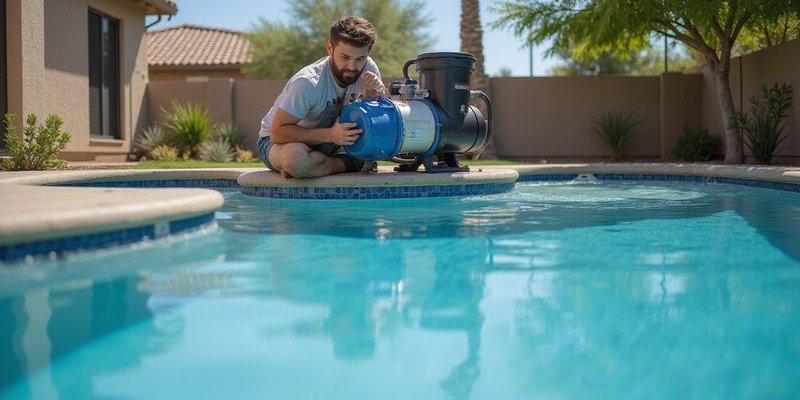
Why Early Preparation Matters
Waiting until May to address chemistry issues is often too late.
| Feature | Winter Status | Spring Requirement | Why It Matters |
|---|---|---|---|
| Chlorine Demand | Low (1.0 ppm) | Medium (2.0 - 3.0 ppm) | UV rays destroy unstabilized chlorine quickly. |
| Pump Runtime | 4-6 Hours | 8-10 Hours | Filtration must outpace algae reproduction rates. |
| Evaporation | < 1/8 inch/day | ~ 1/4 inch/day | Water loss concentrates calcium and salt levels. |
May - June: Summer Preparation
What’s happening: Temperatures consistently hit 100°F+, putting immense stress on equipment and surfaces.
Weekly Tasks
- Test Water 3x Per Week: Chlorine can vanish in 24 hours without proper stabilization.
- Clean Baskets Daily: Mesquite and Palo Verde trees often shed heavily now.
- Monitor Stabilizer (CYA): Maintain 30-50 ppm; higher levels in AZ are common but can lock chlorine efficacy.
- Check Equipment Pad: Listen for grinding noises indicating pump motor bearing failure.
Monthly Tasks
- Clean Filter Cartridges: High pollen counts clog filters faster in May than any other month.
- Inspect Grout/Mastic: The expansion joint between your deck and coping can dry out and crack.
- Verify Auto-Fill: A stuck float valve can cause a pool to overflow or run dry quickly.
- Check Water Hardness: Calcium Hardness should stay between 200-400 ppm to prevent scale.
Pre-Monsoon Prep (Late June)
- Trim Overhanging Trees: Reduce the “fuel” for upcoming storms.
- Secure Yard Items: Heavy winds will turn patio furniture into pool debris.
- Clean Drainage: Ensure deck drains are free of dirt to prevent patio flooding.
- Shock Supply: Have 5-10 lbs of shock ready for immediate post-storm use.
- Inspect Water Line: Calcium deposits at the waterline indicate evaporation intensity.
Pro Tips
We recommend running your pump at night to utilize off-peak electricity rates. SRP and APS peak hours usually run from 2 PM or 3 PM to 7 PM or 8 PM. Shifting your schedule can save significant money on your utility bill.
July - August: Peak Summer & Monsoon
What’s happening: Extreme heat (110°F+), frequent dust storms, and rapid chemical depletion.
Weekly Tasks
- Daily Chemical Check: UV radiation is at its peak intensity.
- Keep Chlorine High: Aim for 3-5 ppm to combat organic load from dust.
- Run Pump 12+ Hours: Circulation is the only way to keep water cool and clean.
- Remove Debris Immediately: Organic matter decomposes rapidly in 90°F water.
After Each Storm
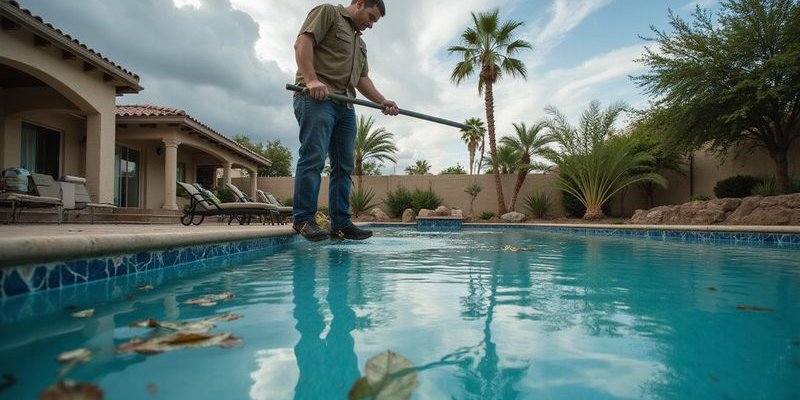
- Skim Immediately: Get leaves out before they sink and stain the plaster.
- Shock the Pool: Dust storms bring phosphates and nitrates that feed algae.
- Check Filter Pressure: A single storm can raise pressure by 10 PSI.
- Inspect Pump Basket: It will likely be packed with leaves and debris.
Monthly Tasks
- Backwash/Clean Filter: Do this more frequently during active monsoon activity.
- Check Water Level: Evaporation can reach 1/2 inch per day in July.
- Inspect Surface: Look for rough patches on the plaster known as “etching.”
- Verify Chemical Storage: Keep chemicals in a cool, dry place away from direct sunlight.
Pro Tips
Our experience shows that “Mustard Algae” is most prevalent during these months. This yellow-brown dust resists normal chlorine levels and requires a specific algaecide containing sodium bromide to eradicate effectively.
September - October: Fall Transition
What’s happening: Days shorten, water temperatures drop, and maintenance requirements shift.
Weekly Tasks
- Adjust Chlorine Down: Drop target range to 2-4 ppm as UV index lowers.
- Reduce Pump Time: Dial back to 8-10 hours to conserve energy.
- Monitor Leaf Drop: Deciduous trees begin losing leaves again.
- Test Phosphates: Remove any buildup from the summer storms.
Monthly Tasks
- Deep Clean Filter: This is the most critical filter clean of the year to remove summer grime.
- Inspect Heater: Test fire your heater now before you actually need it in November.
- Check Salt Cell: Acid wash the cell if calcium buildup is visible.
- Examine Decking: Look for cracks in the Cool Deck or acrylic overlay.
Special Tasks
- Damage Assessment: Identify any plaster popping or tile loss from summer heat expansion.
- Schedule Repairs: Contractors are generally less busy than in spring.
- Plan Resurfacing: October brings ideal curing temperatures for new plaster.
- Store Summer Gear: Clean floats and toys to prevent mold growth during storage.
Pro Tips
We encourage homeowners to use a solar cover starting in late October. Retaining heat now can extend your swimming season by three to four weeks without using gas or electric heaters.
November - December: Winter Preparation
What’s happening: Water cools rapidly, usage stops, and the focus shifts to preservation.
Weekly Tasks
- Test Weekly: Chemical demand is low but pH can still drift.
- Run Pump 6-8 Hours: Keep water moving to prevent stagnation.
- Clear Skimmers: Even in winter, wind blows dirt into the pool.
- Monitor Temps: Be aware of overnight lows.
Monthly Tasks
- Clean Sensors: Wipe down automation and salt sensors.
- Inspect Lights: Check for water inside light fixtures which can trip breakers.
- Trim Vegetation: Cut back plants before frost hits.
- Check Chlorine Floater: Ensure it is not stuck on a step causing a stain.
Special Tasks
- Freeze Protection: Ensure pumps turn on automatically at 34°F.
- Holiday Prep: If heating for a party, start the heater 24-48 hours in advance.
- Inventory Check: Discard expired chemicals.
- Budgeting: Plan for equipment replacements needed in 2026.
Pro Tips
Our clients often ask about draining pools in winter. While safe, never drain a pool completely if heavy rains are in the forecast, as hydrostatic pressure can literally pop the shell out of the ground.
Professional Service Schedule
DIY maintenance is great, but certain tasks require industrial tools and expertise.
| Service | Frequency | Why It Is Necessary |
|---|---|---|
| Water Chemistry Analysis | Quarterly | Professional labs test for metals (copper/iron) and total alkalinity more accurately. |
| Equipment Inspection | Annually | Identifying a failing capacitor now prevents a $1,500 motor replacement later. |
| Filter Acid Wash | Annually | Cartridge pores eventually clog with oils that standard rinsing cannot remove. |
| Heater Tune-Up | Annually (Fall) | Spiders and rodents often nest in burners, creating fire hazards. |
| Plaster Assessment | Annually | Catching a delamination spot early can be a patch repair instead of a full resurface. |
When to Call a Pro Immediately
Delaying action on specific symptoms often leads to catastrophic failure.
- Green Water Despite Shock: This usually indicates high phosphates (over 1000 ppb) or high CYA (over 100 ppm) creating “chlorine lock.”
- Loud Screeching Motor: This is a bearing failure; the pump will seize soon.
- Rapid Water Loss: Losing more than 1/4 inch per day in winter or 1/2 inch in summer signals a leak.
- Structural Cracks: Any crack that is longer than 6 inches or deeper than the plaster coat needs structural staples.
- Breaker Tripping: Electrical issues near water are dangerous and require a licensed electrician.
- Bubbling Plaster: Hollow spots indicate the surface is separating from the gunite shell.
Your Year-Round Partner
Good pool care is a partnership. You handle the routine skimming and chemistry, and we ensure the structural integrity remains sound.
Need help with maintenance or repairs? Contact us - we’re here for Phoenix pool owners every month of the year.
Tags:
Ready to Transform Your Pool?
Get a free estimate from David Resurface today.