How Cool Deck Works: The Science Behind Heat-Reflective Coatings
Discover how Cool Deck keeps pool decks up to 30% cooler. Learn about heat-reflective technology and why it's essential in Arizona.
How Cool Deck Works: The Science Behind Heat-Reflective Coatings
On a 110°F Phoenix summer day, bare concrete can easily hit 165°F. That isn’t just uncomfortable. It is dangerous enough to cause second-degree burns in seconds.
Cool Deck technology is the only reason many of us can use our pools at all between June and September.
But how does a thin layer of coating actually drop surface temperatures by 30 degrees or more?
David Resurface was founded with a simple mission: to provide exceptional pool remodeling and resurfacing services that customers can truly rely on. We have spent years testing materials in the Arizona sun, and the science behind these coatings is fascinating.
Let’s look at the physics of why your deck gets so hot, the specific technology that cools it down, and the real differences between the “brand name” and generic options. For pricing and options, see our pool deck resurfacing services.
The Problem: Concrete Is a Heat Sponge
To understand the solution, you have to understand why standard concrete is such a problem in the Southwest.
Standard concrete has high “thermal mass.” It absorbs solar energy all day and holds onto it tight, releasing it slowly. This is why your patio is still radiating heat at 8:00 PM.
Why concrete reaches 165°F:
- Low Solar Reflectance: Standard gray concrete absorbs about 65-80% of the sunlight that hits it.
- High Thermal Mass: It stores that energy as heat rather than reflecting it back into the atmosphere.
- Zero Convection: Smooth or flat surfaces don’t allow air to flow under your feet.
The Solution: How Cool Deck Technology Works
“Cool Deck” (and the original brand Kool Deck by Mortex) isn’t just paint. It is a specialized topping that uses three distinct physical mechanisms to lower the temperature.
1. High Solar Reflectance (SRI)
The most important factor is the Solar Reflectance Index (SRI). This measures a material’s ability to reject solar heat.
Standard concrete has a low SRI. Cool Deck toppings use chemically engineered pigments designed to reflect a much higher percentage of the solar spectrum, including invisible infrared rays that carry most of the heat.
The physics:
- White/Light Cool Deck: Reflects up to 70-80% of sunlight.
- Dark Concrete: Reflects only 5-15% of sunlight.
- The Result: Much less energy is absorbed into the slab in the first place.
2. Convective Cooling Through Texture
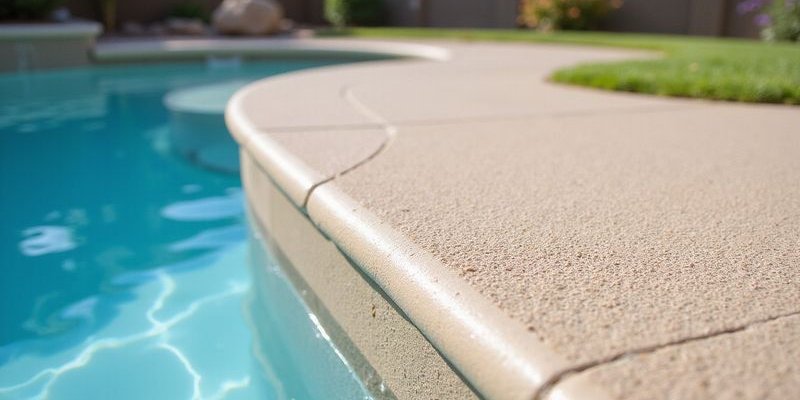
You know that distinctive “orange peel” or knockdown texture? It serves a functional purpose.
How texture cools your feet:
- Increased Surface Area: The bumps increase the surface area, allowing heat to escape faster into the air.
- Air Pockets: The texture creates tiny air gaps between the hot surface and the soles of your feet.
- Micro-Shading: At a microscopic level, the “peaks” of the texture cast shadows on the “valleys,” reducing total heat absorption.
3. Material Composition
This is where the confusion often lies. True Kool Deck (the brand) is a cementitious product—it’s concrete fortified with natural fibers and agents that reduce heat retention.
Generic “cool deck” is often an acrylic paint or overlay.
The material difference:
- Cementitious (Kool Deck): Uses marble sand and white cement which naturally stay cooler than gray cement.
- Acrylic (Lace): Uses a plastic-like polymer layer. While still cooler than concrete, it relies almost entirely on color and texture for its performance.
Real Temperature Differences: The Data
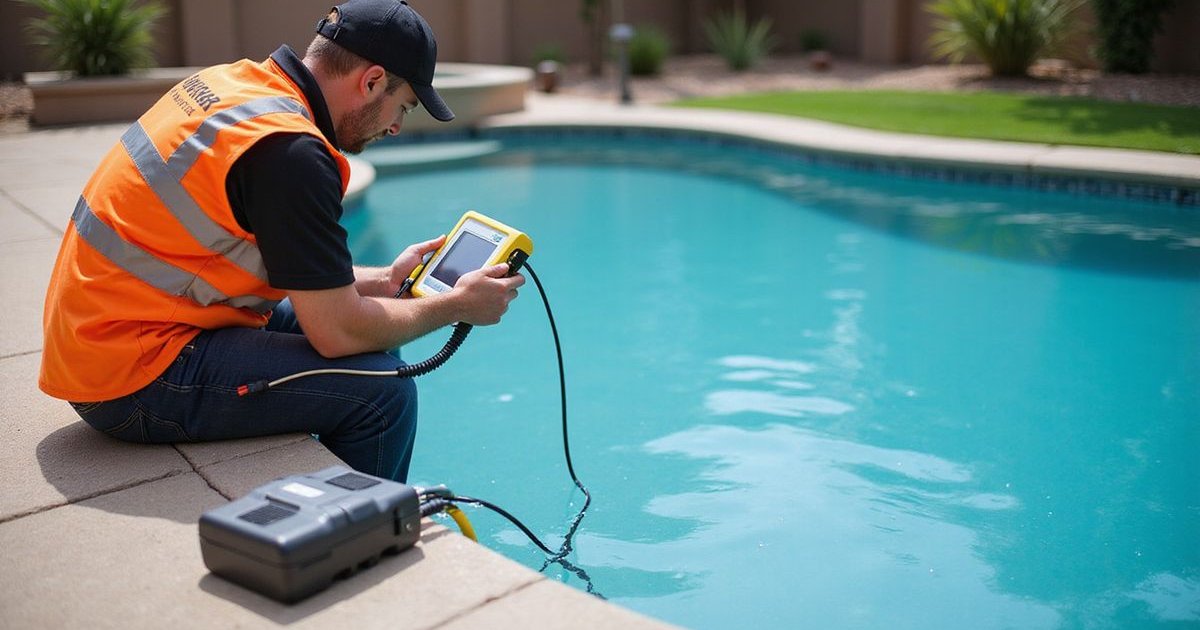
We have measured these surfaces repeatedly during Phoenix heatwaves. The difference between “hot” and “safe” is surprisingly narrow, but the surface temps vary wildly.
Here is what you can expect on a standard 110°F afternoon:
| Surface Material | Surface Temp (°F) | Comfort Level |
|---|---|---|
| Dark Gray Concrete | 160°F - 170°F | Dangerous (Burn Risk) |
| Brick Pavers | 145°F - 155°F | Uncomfortable |
| Light Concrete | 140°F - 150°F | Hot |
| Standard Cool Deck | 115°F - 125°F | Comfortable |
| Travertine Pavers | 110°F - 120°F | Very Comfortable |
The crucial context: Human skin begins to feel pain around 111°F. A surface at 140°F can cause a burn injury in less than 5 seconds. Cool Deck keeps the surface right at the edge of the “safe” zone, while standard concrete pushes it into the “danger” zone.
Comparison: Kool Deck vs. Acrylic vs. Pavers
Many homeowners use “Cool Deck” as a generic term, but you actually have three main choices for a cool surface.
Option 1: Mortex Kool Deck (The Original) This is a concrete topping. It is the coolest option aside from natural stone but requires a specific skill set to install.
- Pros: Lower temperature, authentic look, chemically bonds to concrete.
- Cons: Can be harder to clean; colors are limited to earth tones.
Option 2: Acrylic Lace (The Modern Standard) We see this most often on renovations. It is a polymer-based spray texture that is painted with a “cool” sealant.
- Pros: Huge color variety, stain-resistant, easier to repair.
- Cons: Slightly warmer than cementitious Kool Deck (retains more heat).
Option 3: Travertine Pavers Natural stone like travertine is dense but light-colored.
- Pros: Premium look, naturally cool, zero cracking issues (floating installation).
- Cons: Significantly higher cost ($15-$25+ per sq ft).
For a detailed comparison of Cool Deck vs pavers, see our guide on Cool Deck vs Pavers in Arizona.
Factors That Affect Cooling Performance
Color Selection is Critical
The law of physics still applies: lighter is cooler.
- Cream / Sand / White: The highest SRI values. These will stay 10-15°F cooler than darker tans.
- Medium Tan / Beige: The standard for a reason. They hide dirt well while still offering decent reflection.
- Dark Brown / Gray: We recommend avoiding these for pool decks in Phoenix. They absorb too much heat to be barefoot-friendly.
The Age Factor
Over time, your deck gets hotter.
- Sealer Breakdown: As the reflective sealer wears off, the underlying concrete absorbs more UV rays.
- Texture Loss: High-traffic areas wear smooth, losing that convective cooling benefit.
- Dirt Buildup: Dark grime absorbs heat. A dirty deck is a hot deck.

Maintaining Peak Performance (Insider Tips)
Keeping your deck cool requires protecting the reflective surface.
1. Avoid Acid Washes Many people think acid washing cleans everything. Do not do this. Acid etches the surface, opening up the pores and making it harder to clean in the future. Use TSP (Trisodium Phosphate) or a simple degreaser instead.
2. Use the Right Sealer In Arizona, we generally prefer solvent-based acrylic sealers over water-based ones for pool decks. They penetrate deeper, offer better UV stability, and can be re-coated easily every 2-3 years.
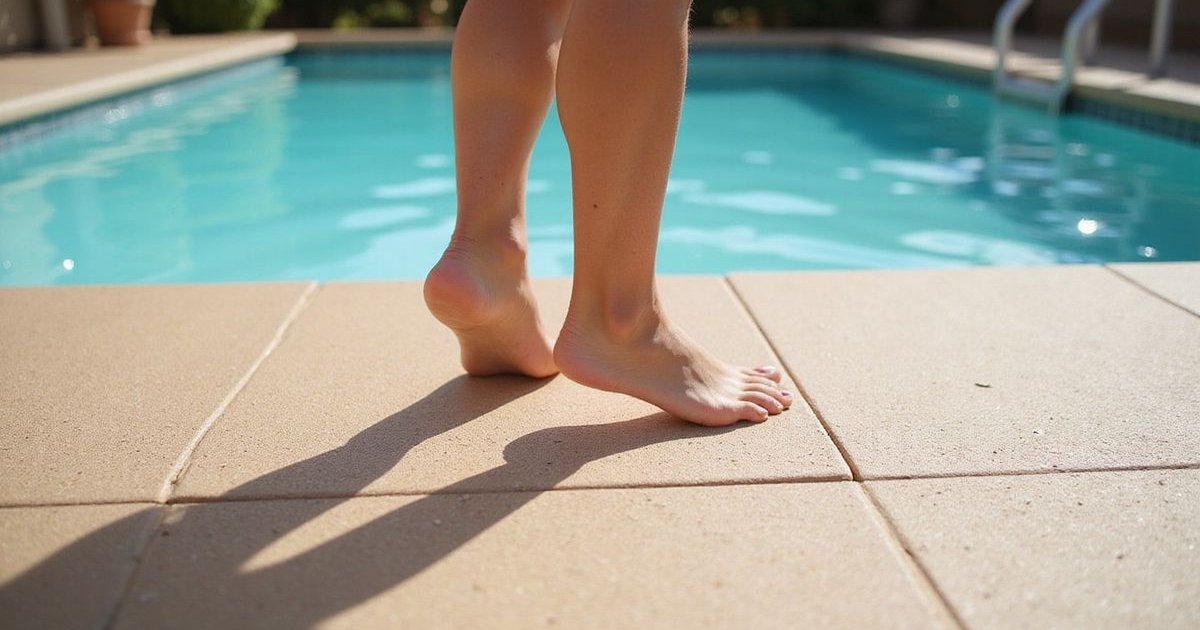
3. The “Barefoot Test” If you can’t hold your hand on the deck for 5 seconds at 2 PM, your coating has likely lost its reflective properties. It is time to reseal.
When to Recoat
If your Cool Deck is 10-15 years old, it may be suffering from “delamination” (popping off) or just general fatigue.
Consider a full resurface if:
- You see widespread chipping or flaking.
- The texture has worn completely smooth.
- Cracks are running through the texture and the concrete below.
A fresh coat of acrylic can often save an old deck without tearing it out.
The Bottom Line
Cool Deck isn’t magic. It is a practical application of solar reflectance and thermal dynamics.
For Arizona homeowners, it is the difference between a backyard you look at and a backyard you actually live in.
Ready to reclaim your pool area? Contact us for a free estimate and let’s see which cooling solution is right for your home.
Tags:
Ready to Transform Your Pool?
Get a free estimate from David Resurface today.