Pool Deck Repair vs Replace: When to Patch and When to Resurface
Should you repair or replace your pool deck? Learn when patching works and when full resurfacing is the smarter investment.
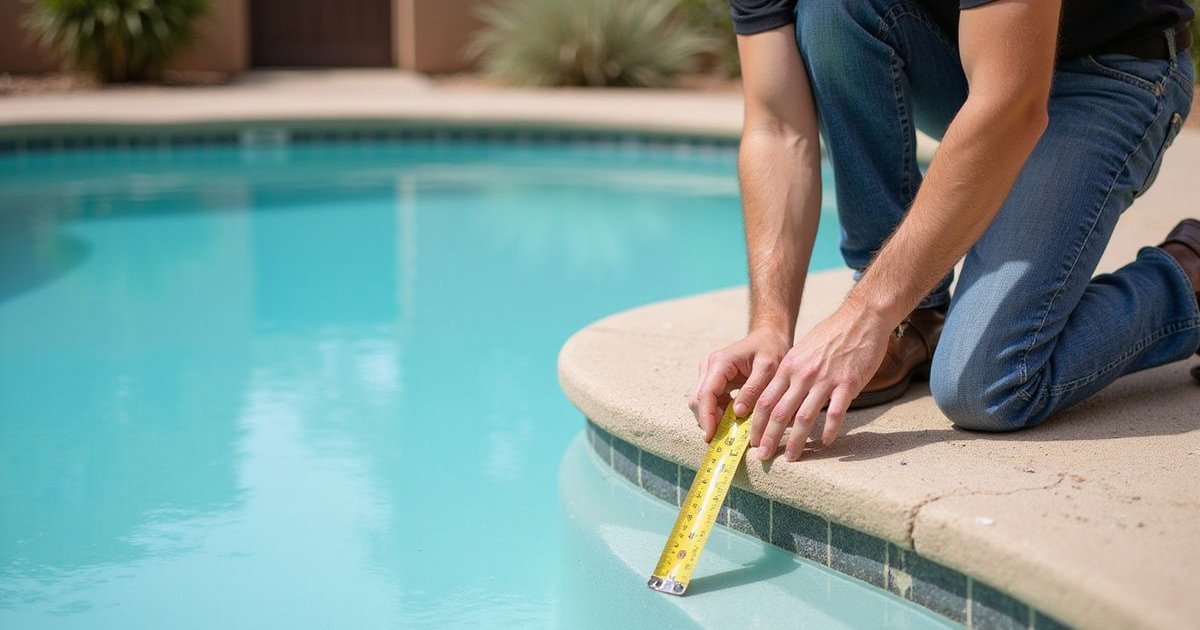
Your pool deck has cracks. The coating is fading under the Arizona sun. Parts are rough, uneven, or scorching hot to the touch. The big question: should you patch the problems or just resurface the whole thing?
As someone who has inspected thousands of Phoenix backyards, I know the difference between a simple cosmetic fix and a money pit. You need a solution that handles our 115°F summers and shifting clay soils without destroying your budget. For professional deck work, see our pool deck resurfacing services.
Quick Decision Guide
From what I see in the field, this table covers 90% of the situations homeowners face.
| Condition | Best Approach | Why It Works |
|---|---|---|
| Hairline cracks (less than 1/8 inch) | Repair | Low cost; prevents water infiltration. |
| Faded coating, hot surface | Spot repair + seal | Restores color; extends life by 2-3 years. |
| Multiple cracks, 12+ years old | Full resurfacing | Cost of repairs approaches 50% of new surface. |
| Heaving or shifting slabs | Concrete repair first | Coating will crack again if the base moves. |
| Outdated “Cool Deck” texture | Acrylic Resurfacing | Modernizes look; restores cooling properties. |
When Repair Makes Sense
1. Isolated Cracks (The Nickel Test)
If you have one or two cracks in otherwise solid concrete, you might be safe.
How to check: Grab a nickel. If the crack is narrower than the coin (about 1/8 inch) and hasn’t grown in the last year, it is likely a non-structural shrinkage crack.
Good candidates for repair:
- Static hairline cracks: These stopped moving years ago.
- Surface crazing: Fine, web-like cracks that don’t penetrate the concrete.
- Small areas: Damage is limited to less than 50 square feet total.
Typical cost: In the Phoenix metro area, professional crack repair runs about $50 per linear foot.
2. Small Areas of Coating Damage
Localized wear, scratches, or small chips from patio furniture can often be spot-repaired without redoing the entire deck.
Good candidates:
- Impact damage: Chips from dropped heavy objects or tools.
- High-traffic wear: Smooth spots near the ladder or back door.
- Furniture scrapes: Drags from heavy loungers or grills.
Typical cost: Spot repairs generally range from $300 to $800, depending on color matching difficulty.
3. Budget Constraints
Sometimes full resurfacing isn’t in the budget right now. Strategic repairs can buy you time to save for the full project.
Smart temporary approach:
- Prioritize safety: Grind down tripping hazards immediately.
- Seal the gaps: Use a high-quality polyurethane sealant to stop water from eroding the soil beneath.
- Paint the patches: A simple deck paint can blend repairs for a year or two.
When Resurfacing Is the Better Choice
1. The 30% Rule
If you are patching three, four, or five different areas, stop. You will spend nearly as much on labor for patches as you would for a uniform new surface.
The math: Once repair estimates hit 30% of the cost of resurfacing, the better investment is almost always a full resurface.
2. Coating Delamination (The Hollow Sound)
Signs the entire surface is at the end of its life often start with hidden detachment.
How to check: Drag a chain or tap a hammer lightly across the deck. If you hear a “hollow” or drum-like sound instead of a solid “thud,” the coating has separated from the concrete.
Visual signs:
- Bubbling: The surface looks like it has air pockets.
- Peeling: Large flakes coming off in sheets.
- Widespread rough spots: The texture hurts bare feet.
3. Deck is Too Hot
Worn “Cool Deck” (a trademarked product) or acrylic lace loses its heat-reflective properties as the texture wears smooth.
The reality:
- Texture matters: The air pockets in the texture are what keep the deck cool.
- Color fading: Darker, worn concrete absorbs significantly more UV radiation.
- Comfort: A fresh acrylic lace surface can be 10-20 degrees cooler than bare concrete. Learn about the science in our guide on how Cool Deck works.
4. Age of Existing Surface
Different coatings have natural lifespans in our desert climate.
Typical Phoenix lifespans:
- Original Cool Deck (Keystone): 10-12 years.
- Acrylic Lace (Synthetic): 10-15 years (easier to recoat).
- Epoxy Paint: 2-5 years (often fails quickly in UV).
- Travertine Pavers: 25+ years (lifetime material).
If you are near or past these marks, the material is likely brittle and ready for replacement.
5. You Want a New Look
No amount of repair changes a dated appearance. If you want:
- Modern colors: Moving from 1990s salmon to modern greys or creams.
- Travertine upgrade: Switching from concrete to stone pavers ($15-$30 per sq ft).
- Uniformity: Eliminating the “patchwork quilt” look of old repairs.
The True Cost Comparison (2026 Estimates)
Let’s compare scenarios for a typical 500 sq ft pool deck in the Valley.
Scenario A: Multiple Repairs
- Crack repair (8 locations): $800
- Spot coating repairs: $600
- Resealing entire deck: $500
- Total: $1,900
- Result: Visible patches, potential for new cracks nearby within a year.
Scenario B: Full Resurfacing (Acrylic Lace)
- Complete resurfacing: $2,000 - $4,000 ($4-$8 per sq ft).
- Result: Brand new uniform surface, fully adhered, 10-year expected life.
The takeaway: For a difference of roughly $1,000-$2,000, you get a brand new deck with a warranty rather than a band-aid solution.
What About Structural Issues?
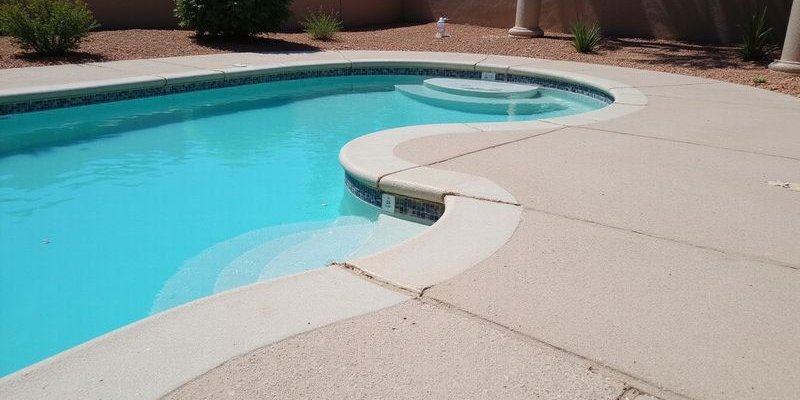
Some problems go deeper than the coating. Arizona’s expansive clay soil is notorious for shifting concrete.
Concrete Settling
If sections have sunk or shifted, water will pool and create hazards.
The fix:
- Minor settling: Polyurethane foam injection (lifting) costs $5-$25 per sq ft.
- Major shifting: Requires breaking out and pouring new concrete sections.
Structural Cracks
These are different from hairline shrinkage cracks.
Warning signs:
- Vertical displacement: One side of the crack is higher than the other.
- Width: The crack is wider than 1/8 inch or tapered (wider at one end).
- Movement: The crack opens and closes with the seasons.
These require structural staples or epoxy injection before any coating is applied.
Drainage Problems
Water pooling on your deck indicates improper slope or blocked drainage.
Why it matters: Standing water accelerates coating failure and can saturate the clay soil, causing further heaving. You must fix the slope or drains before resurfacing.
The Repair-First Mentality for Concrete
Before committing to resurfacing, the concrete base must be sound.
- Grind structural cracks: We open them up to fill them properly.
- Stabilize settling: We ensure the slabs won’t move again.
- Verify drainage: We confirm water flows away from the pool edge.
- Remove delamination: We grind off any loose existing topping.
Then apply your chosen coating to a solid foundation.
Questions to Ask Before Deciding
Ask yourself:
- Is this my “forever home” or am I selling in 2 years?
- Can I tolerate the look of mismatched patch colors?
- Is the concrete beneath the coating solid or crumbling?
- Do I want to upgrade to a cooler material like travertine?
Ask a contractor:
- “Do you grind the cracks before filling them?” (They should say yes).
- “What is the specific warranty on delamination?”
- “Can you match the texture of my existing deck for a repair?”
- “How do you handle expansion joints?” (They should never be coated over).
My Recommendation
After assessing thousands of pool decks across the state, here is my honest approach.
Repair if:
- Damage is truly isolated (1-2 hairline cracks).
- The coating is less than 5 years old and healthy.
- You are selling the house immediately and just need safety compliance.
- Budget is your absolute primary constraint.
Resurface if:
- You have widespread “hollow” spots or delamination.
- The current coating is over 10 years old.
- You want to reduce the surface temperature for bare feet.
- You plan to stay in the home for 5+ years.
A complete resurface typically offers the best long-term value. You get a uniform surface, reliable cooling performance, and peace of mind knowing the job is done right.
Not sure which approach is right for your deck? Get a free assessment and we’ll give you an honest recommendation.
Tags:
Ready to Transform Your Pool?
Get a free estimate from David Resurface today.