Gas vs Electric Pool Heaters: Which Is Best for Phoenix Pools?
Compare gas and electric pool heaters for Arizona. Learn costs, efficiency, and which type extends your swimming season best.
Gas vs Electric Pool Heaters: Which Is Best for Phoenix Pools?
Want to swim year-round in Phoenix? Extend your pool season into November through March? You’ll need a pool heater. But which type - gas or electric heat pump?
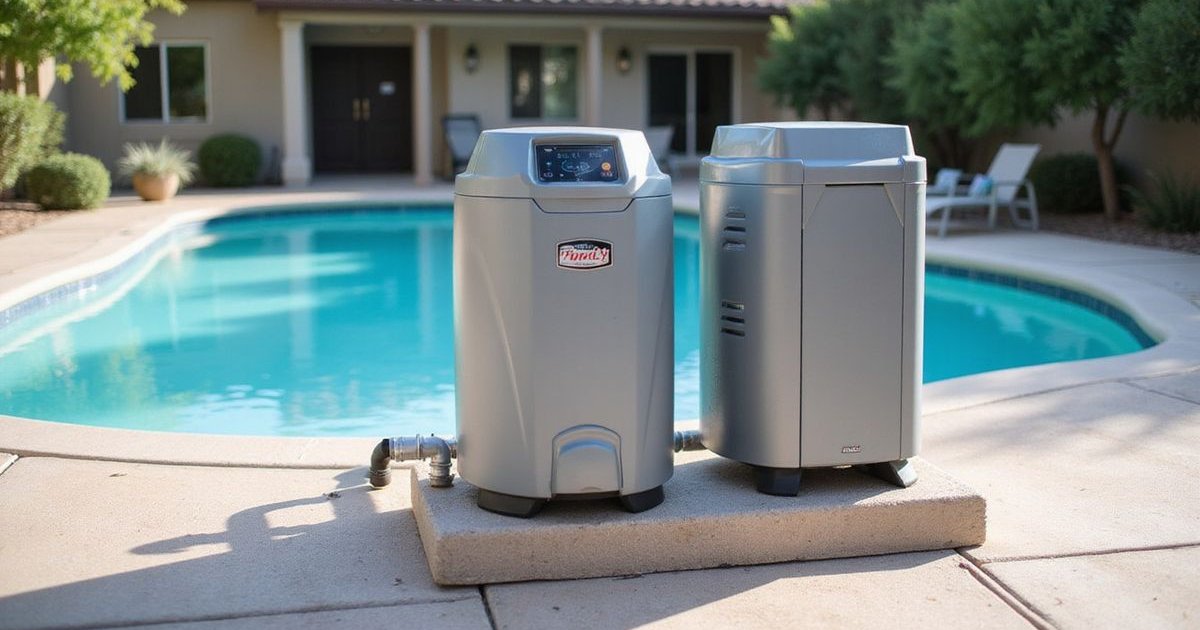
Let’s compare the two main options for Arizona pools. For installation and service, explore our pool equipment services.
Quick Comparison
| Factor | Gas Heater (Natural Gas) | Heat Pump (Electric) |
|---|---|---|
| Heating Speed | Fast (1-2 degrees/hour) | Slow (1 degree/hour) |
| Monthly Operating Cost | High ($300-$500+) | Low ($50-$100) |
| Upfront Cost | Lower ($1,500-$3,000) | Higher ($3,000-$5,000) |
| Best For | Spas & Weekends | Daily Swimming |
| Lifespan | 8-12 years | 15-20 years |
| Cold Weather | Works at any temp | Less efficient below 50°F |
Gas Pool Heaters
Gas heaters burn natural gas or propane to heat water quickly and powerfully.
How Gas Heaters Work
Pool water flows through a heat exchanger while gas burners below heat the copper tubes. Simple, proven technology used for decades.
Gas Heater Pros
Fast heating: Raise pool temperature 20-30°F in just a few hours. This speed is perfect for “I want to swim tonight” situations.
Works in any weather: Cold, cloudy, windy - doesn’t matter. Gas heaters deliver full power regardless of the air temperature outside.
Lower purchase price: Entry-level gas heaters generally start around $1,500 to $2,500 installed.
Compact size: These units typically have a smaller footprint than heat pumps.
Gas Heater Cons
Higher operating costs: Natural gas isn’t cheap. Southwest Gas rates fluctuate, and heating a standard pool might cost $20 to $40 for a single weekend.
Shorter lifespan: The copper heat exchangers eventually corrode. You can expect a typical lifespan of 8 to 12 years.
Requires gas line: If you don’t have natural gas at the equipment pad, running a new line adds significant complexity and cost.
Not efficient for maintaining temperature: These are best for heating up quickly rather than keeping the water warm 24/7.
Electric Heat Pumps
Heat pumps don’t create heat - they transfer it from the air to your pool water.
How Heat Pumps Work
A fan draws in warm air, and a compressor concentrates that heat (like a reverse air conditioner). The heat transfers to pool water flowing through the unit.
Heat Pump Pros
Low operating cost: Because they move heat rather than creating it, these units are 300% to 500% efficient. Heating that same pool might cost just $3 to $5 per session.
Long lifespan: They use titanium heat exchangers which are nearly impervious to pool chemical corrosion. Expect 15 to 20 years with proper care.
Maintains temperature economically: This is the perfect solution for keeping a pool warm continuously for daily swimming.
No combustion: You won’t need a gas line, exhaust venting, or worry about combustion safety.
Heat Pump Cons
Slow heating: Adding 20°F takes 12 to 24+ hours. We tell clients this is not for last-minute warm-ups.
Higher purchase price: Quality heat pumps generally run $3,000 to $5,000 installed.
Weather dependent: Efficiency drops as air temperature falls. Below 50°F, most standard units struggle to extract heat.
Larger footprint: Heat pumps are physically bigger than gas heaters and need more clearance.
Needs airflow: You must install these outdoors with plenty of space for air circulation.
Real-World Cost Comparison
Let’s look at the math for heating a 15,000-gallon pool from 60°F to 82°F in Phoenix.
Cost Breakdown:
| Factor | Gas Heater | Heat Pump |
|---|---|---|
| Time to heat | 3-5 hours | 18-30 hours |
| Energy used | ~8 therms gas | ~25 kWh |
| Cost estimate (2025/26) | $15-$25 per heat-up | $3-$6 per heat-up |
For occasional use (weekend swim):
- Gas: Heat Friday evening, swim Saturday.
- Heat pump: Start Wednesday to swim Saturday.
For maintaining temperature:
- Gas: Extremely expensive to run continuously ($400+ monthly).
- Heat pump: Affordable to keep warm 24/7 ($50-$100 monthly).
Pro Tip: In Phoenix, evaporation is the biggest thief of heat. We strongly recommend using a liquid solar cover or a bubble blanket. Without one, you are paying to heat the dry desert air.
Which Is Right for Arizona?
Choose a Gas Heater If:
- You swim only occasionally (weekends, guests, etc.).
- You want “swim on demand” capability.
- You already have natural gas service at the pool pad.
- You heat a spa that needs quick warm-up (15-20 minutes).
- Your budget favors lower upfront cost over long-term savings.
Choose a Heat Pump If:
- You want to swim regularly (multiple times weekly).
- You plan to maintain temperature throughout the season.
- You want the lowest possible monthly operating costs.
- You are extending the season (March-May, September-November).
- You plan to stay in the home long-term to see the ROI.
The Arizona Factor
Phoenix’s climate actually makes heat pumps very effective for most of the year.
Our advantages:
- Mild winter temps: Daytime highs in the 60s and 70s are perfect for heat pump efficiency.
- Abundant sunshine: This warms the air quickly, boosting performance.
- Low humidity: While this increases evaporation, it generally keeps the unit coils from freezing up.
- Long shoulder seasons: You get excellent value during the long spring and fall months.
The catch: If you only swim during summer, you might not need a heater at all! Arizona pools reach comfortable temps naturally from May through September.

Solar Pool Heating: The Third Option
Worth mentioning: solar heating uses roof-mounted panels to warm pool water for free (after installation).
Solar pros:
- Zero operating cost.
- Environmentally friendly.
- Long lifespan (20+ years).
Solar cons:
- Highest installation cost ($4,000-$8,000).
- Requires significant south or west-facing roof space.
- Only works during sunny hours.
- Can’t heat quickly or maintain temp overnight.
Solar works well in Arizona as a supplement or primary heater for extended seasons.
Combination Systems
Many Phoenix pool owners get the best of both worlds with a hybrid approach.
Heat pump + gas backup:
- The heat pump maintains temperature affordably during the week.
- The gas heater boosts the spa quickly when you want a soak.
- This offers maximum flexibility.
Cost: This has a higher upfront investment, but it delivers the lowest operating costs and best convenience.
Our Recommendation
For most Phoenix homeowners who want to extend their swimming season:
Best value: Electric heat pump. The operating savings pay back the higher upfront cost within 2-3 seasons, and Arizona’s climate is ideal for heat pump efficiency.
Best convenience: Gas heater (if you already have gas service). Nothing beats the ability to swim warm within hours.
Best overall: Combination system for those who can invest upfront.
Installation Considerations
For gas heaters:
- Need a gas line run to the equipment pad.
- Require proper venting to prevent carbon monoxide buildup.
- Must meet strict code clearances from windows and property lines.
For heat pumps:
- Need a dedicated 50-amp electrical circuit (check your breaker box space!).
- Require adequate airflow space around the unit (no bushes or walls too close).
- Should be level and supported on a concrete pad.
Both need professional installation to ensure safety, efficiency, and warranty coverage.
Ready to extend your swimming season? Contact us for a free consultation and we’ll help you choose the right heater for your pool and lifestyle.
Tags:
Ready to Transform Your Pool?
Get a free estimate from David Resurface today.