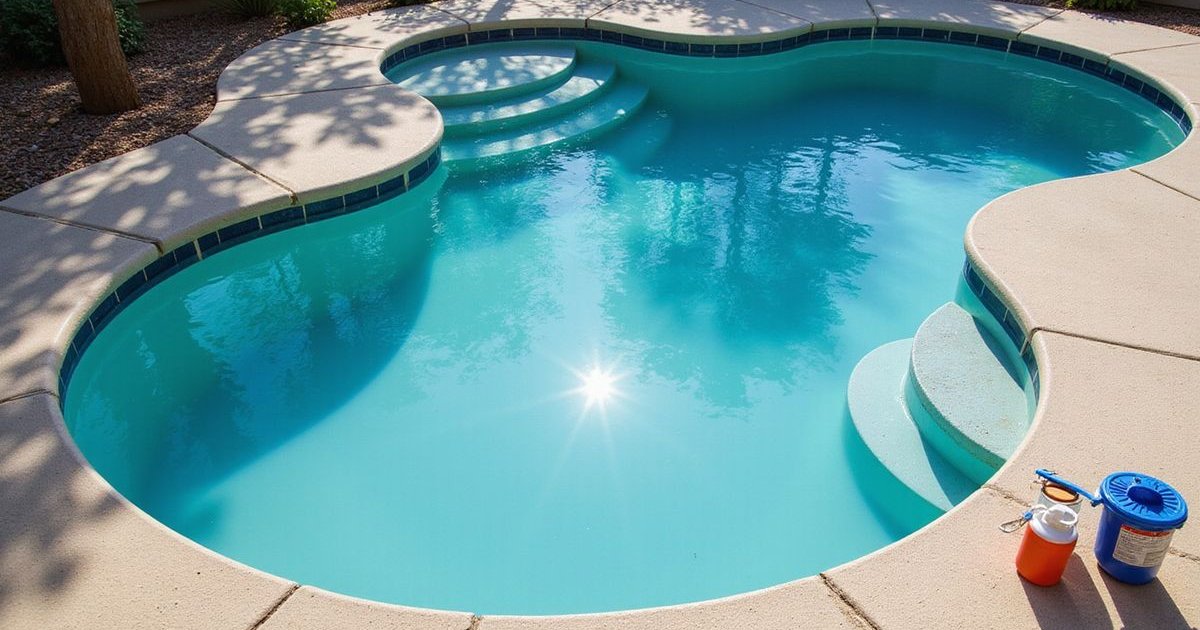
How to Clean Pool Tile and Remove Calcium Buildup
White scale on your pool tile? Learn DIY and professional methods to remove calcium deposits and restore your waterline tile.
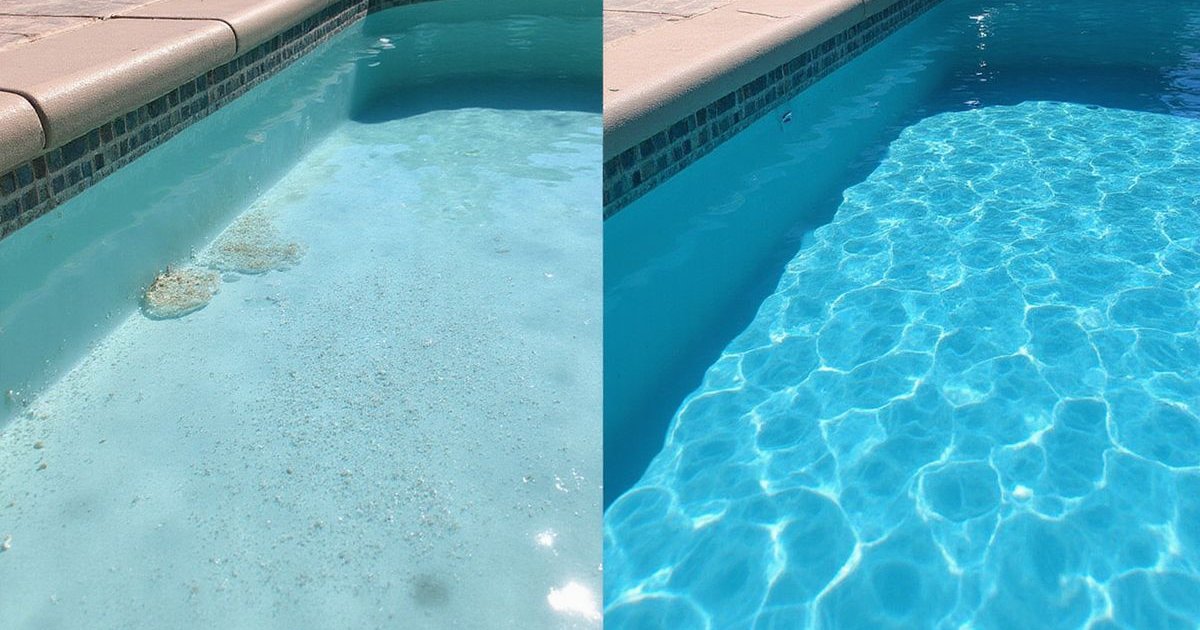
That white, crusty line on your pool tile isn’t dirt. It is calcium scale.
Left untreated, this buildup gets thicker and harder to remove. Eventually, it damages your tile and grout beyond repair. Arizona’s hard water makes this an ongoing battle for almost every pool owner we meet.
We founded David Resurface to help homeowners navigate these exact challenges.
You see this issue constantly because our local water supply is packed with minerals. Ignoring it often leads to expensive renovations down the road.
Let’s look at why this happens, how to identify the type of scale you have, and the specific methods that actually work to remove it.
What Causes Calcium Buildup?
The Science Behind the Scale
Arizona tap water contains high levels of dissolved calcium and magnesium. Phoenix municipal water reports often show hardness levels ranging from 12 to 20 grains per gallon.
Pool water evaporates at the waterline constantly in our dry climate.
When that water turns to vapor, it leaves those heavy minerals behind on your tile. Over time, layer upon layer of calcium carbonate builds up. This creates that familiar white crust you see right at the water’s edge.
Contributing Factors
We often find that specific conditions accelerate this process.
- High Evaporation Rates: An average Phoenix pool can lose over 6 feet of water per year to evaporation, leaving massive mineral concentrations behind.
- High pH Levels: Water with a pH above 7.8 turns dissolved calcium into solid scale much faster.
- High Calcium Hardness: If your water hardness exceeds 400 parts per million (ppm), deposits become inevitable.
- Heat: Higher water temperatures in summer make calcium less soluble, causing it to snap out of solution and stick to surfaces.
Types of Calcium Deposits
Knowing which type of calcium you are dealing with saves you hours of frustration.
Calcium Carbonate
This is the most common form of scale.
Appearance: White, flaky, and relatively soft. Ease of removal: Moderate. It usually bubbles up and dissolves when exposed to acid. The Pro Test: Place a single drop of muriatic acid on a dry deposit. If it fizzes and foams immediately, it is carbonate.
Calcium Silicate
We consider this the “nightmare” scale.
Appearance: White or gray, extremely hard, and feels rough like sandpaper. Ease of removal: Difficult. It requires heavy physical force or blasting to remove. The Reality: Silicate often takes months or years to form. It occurs when layers of carbonate harden and chemically bond with the silica in your tile glazing.
DIY Cleaning Methods
Light Calcium Buildup
For thin, recent deposits, simple chemical reactions can do the heavy lifting.
The Vinegar Soak
- Lower your water level about four inches below the tile line.
- Fill a spray bottle with cleaning vinegar (6% acidity is better than standard 5%).
- Saturate the scale and let it sit for 20 minutes.
- Scrub vigorously with a nylon tile brush.
- Rinse with fresh water.
Cost: Under $10 Effectiveness: Effective only for very new, thin haze.
Muriatic Acid Wash
We recommend extreme caution with this method.
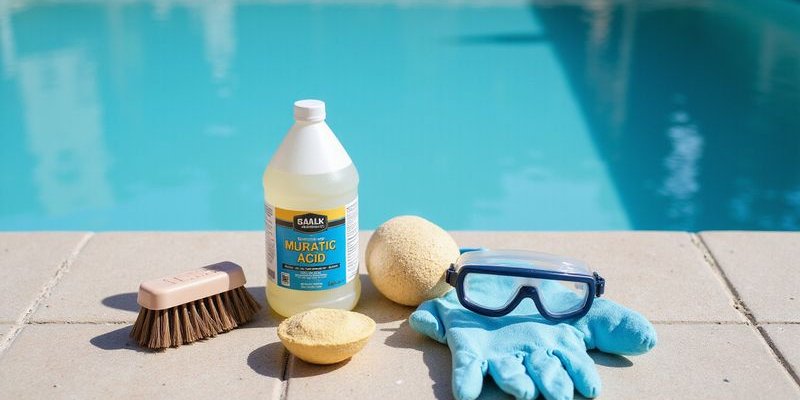
- Wear acid-resistant nitrile gloves, safety goggles, and a vapor mask.
- Mix one gallon of water with one cup of muriatic acid in a plastic bucket (Always add acid to water, never water to acid).
- Apply the solution carefully with a brush.
- Allow it to fizz for 30-60 seconds.
- Scrub with a stiff brush and rinse thoroughly with pool water.
Cost: Under $20 Effectiveness: Good for moderate carbonate buildup. Caution: Spills will etch your pool deck instantly.
Moderate Calcium Buildup
When chemicals alone fail, you need abrasion.
Pumice Stone
- Soak the pumice stone in water for five minutes before use.
- Keep the stone and tile wet continuously to prevent scratching.
- Rub the deposit gently in a back-and-forth motion.
- Apply light pressure only on the scale itself.
Cost: $5-10 per stone Effectiveness: Great for spot cleaning. Warning: Never use pumice on glass tile or vinyl liners. It will leave permanent scratches.
Commercial Calcium Removers
Products like Bio-Dex 300 Protect All are industry favorites in our region.
- Apply the gel or thick liquid directly to the tile.
- Allow it to dwell for the time specified on the bottle (usually 15 minutes).
- Scrub with a abrasive pad designed for pools.
- These heavy-duty cleaners cling to vertical surfaces better than liquid acid.
Cost: $25-$45 per bottle Effectiveness: superior to generic acid for vertical tile lines.
Heavy/Silicate Buildup
If the deposit is thick, gray, and does not fizz with acid, DIY methods usually fail.
The Hard Truth: Heavy silicate buildup is harder than the pool tile glaze itself. Attempting to scrape it off with razor blades or screwdrivers often results in chipped tile or destroyed grout.
We strongly advise against attacking silicate buildup without professional-grade equipment.
Professional Cleaning Options
Glass Bead Blasting
This is widely considered the gold standard for restoration in Arizona.
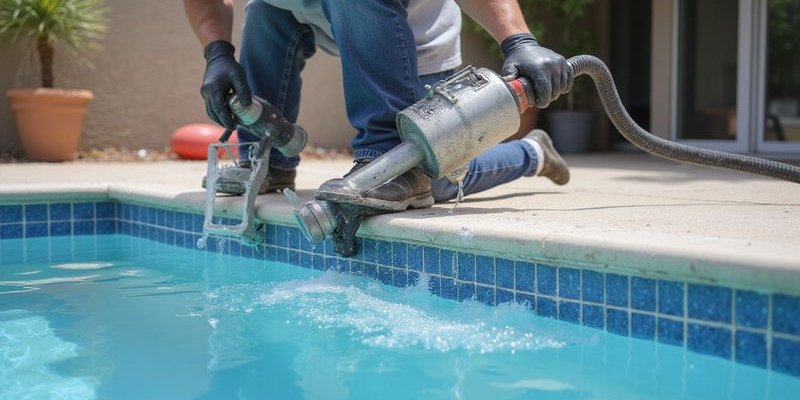
How it works: A low-pressure stream shoots tiny, spherical glass beads (specifically Kieserite or Max-Strip media) at the tile. The beads are harder than calcium but softer than the tile glaze.
Pros:
- Removes thick silicate that chemicals cannot touch.
- Safe for ceramic, porcelain, and most stone tiles.
- Brightens and cleans the grout lines simultaneously.
- Completion time is usually 3-5 hours for an average pool.
Cons:
- Requires draining the water level down 6-12 inches.
- Cost: $5.00 - $10.00 per linear foot ($450-$900 for an average pool).
Pressure Washing
High-pressure water can work, but it carries risks.
Best for: Natural stone or pebble surfaces above the waterline. Avoid on: Loose tiles, cracked grout, or glass mosaic.
Cost: $250-$500
Chemical Treatment Services
Some pros use industrial-strength acidic gels that are not sold to the public.
Best for: Widespread carbonate haze across large surface areas. Benefit: Zero risk of physical impact damage to the tile.
Cost: $200-$450
Prevention Strategies
Balance Your Water
Prevention is cheaper than restoration.
We use the Langelier Saturation Index (LSI) to predict scale formation. Keeping your water balanced prevents the minerals from dropping out of solution.
| Parameter | Target Range |
|---|---|
| pH | 7.4 - 7.6 |
| Calcium Hardness | 200 - 400 ppm |
| Total Alkalinity | 80 - 120 ppm |
| Water Temp | Factor in heat (scale forms faster at 85°F+) |
Key Insight: High pH is the primary trigger for scale. Keeping pH below 7.8 is your best defense.
Regular Maintenance
Consistent small actions prevent big problems.
- Weekly Brushing: Scrub the waterline with a tile brush every time you skim the pool.
- Lubricate: Wipe tiles with a specialized tile protector to make surfaces slicker.
- Monitor Levels: Check your auto-fill valve. If it leaks, it constantly introduces hard fresh water into the pool.
Products That Help
Sequestering Agents:
- Products like Orenda SC-1000 or Jack’s Magic The Purple Stuff wrap around mineral ions.
- They keep calcium suspended in the water so it cannot stick to walls.
- Cost: $30-$60 per quart (maintenance dose is small).
Salt Cell Protectors:
- Salt pools naturally run at a higher pH, creating more scale.
- Using a sacrificial anode or scale inhibitor specifically for salt systems is vital.
Water Softeners/Conditioners
Dedicated pool owners sometimes treat the source.
- Inline hose filters can remove some solids when you top off the pool.
- Whole-home softeners (if plumbed to the auto-fill) drastically reduce calcium entry.
- This is the most effective long-term solution for Phoenix hard water.
When to Replace vs. Clean
Cleaning is not always the right move.
Clean if:
- The tile glaze is shiny and intact beneath the scale.
- The grout is solid and not pitting.
- The tiles are firmly attached to the wall (tap them—if they sound solid, keep them).
Consider replacement if:
- Delamination: Tap the tiles with a coin. A hollow sound means they are pulling away from the wall.
- Cracks: Scale often grows behind loose tiles, pushing them further out until they crack.
- Age: If the tile is 15+ years old and the style is dated, the cost of blasting might be better spent on new modern tile.
- Grout Failure: If the grout is turning to powder, cleaning will blast it away entirely.
We often recommend replacement during a full resurfacing project since the pool is already drained.
What About Grout?
Scale destroys grout integrity faster than it hurts tile.
Signs of grout damage:
- Grout lines that look deeply recessed or missing.
- Calcium that has grown into the grout pores (impossible to remove without removing the grout).
- Loose grit at the bottom of the pool near the walls.
Solutions:
- Regrouting: We can grind out old grout and replace it for $4-$8 per foot.
- Epoxy Grout: Upgrading to epoxy grout (like Starlike) makes the lines waterproof and stain-proof for the future.
The Bottom Line
Light calcium buildup is part of owning a pool in Arizona. Regular brushing and pH management keep it under control.
Once the scale turns thick or gray, however, professional cleaning is the only way to protect your investment. DIY attempts on heavy scale often result in scratched glaze or chipped tiles that cost much more to fix.
Dealing with stubborn scale? Contact us for professional tile cleaning or to discuss if replacement is the smarter option for your aging pool.
Tags:
Ready to Transform Your Pool?
Get a free estimate from David Resurface today.