7 Signs Your Pool Needs Resurfacing (Don't Ignore #5)
Is your pool rough, stained, or losing water? Learn the 7 warning signs that indicate it's time to resurface your swimming pool.
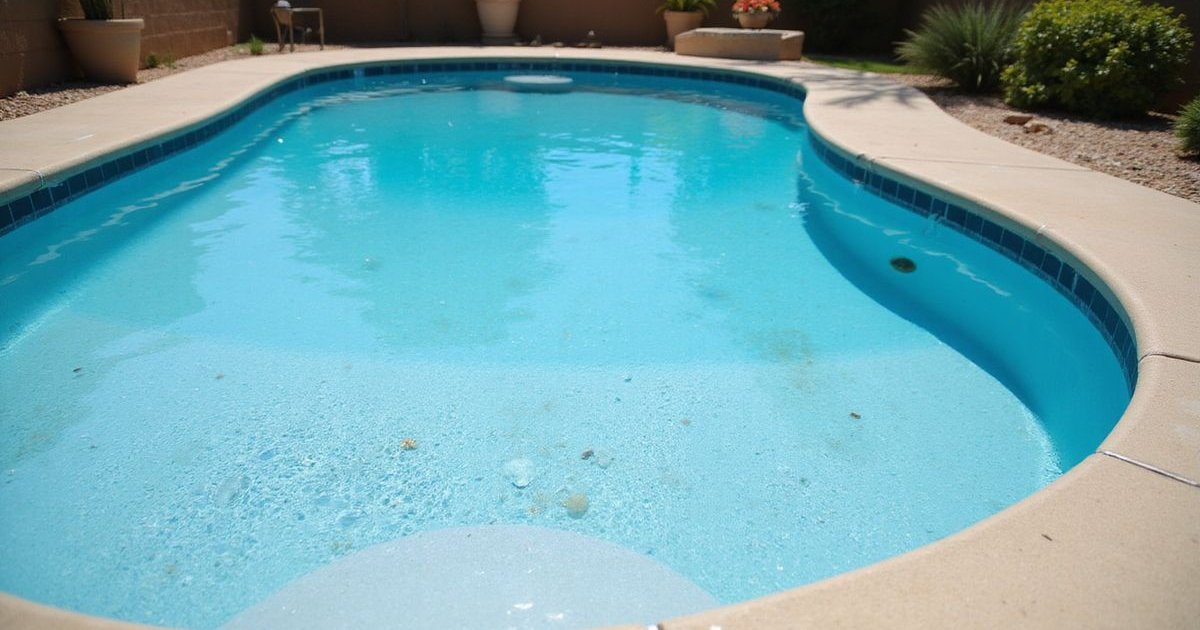
Your pool often communicates its condition through physical sensations rather than just visual cues. When those smooth surfaces turn into rough patches, stubborn stains appear, or water levels drop mysteriously, these are not just cosmetic annoyances; they serve as critical warning signs that the protective finish is failing.
We established David Resurface with a commitment to help Phoenix homeowners interpret these signals before small repairs turn into major renovations. Ignoring these symptoms frequently leads to compounding damage that costs significantly more to fix. The following guide details exactly what to look for and how to respond to each warning sign. When it’s time to act, explore our pool resurfacing services for your options.
The 7 Warning Signs
1. Rough, Sandpaper-Like Texture
Run your hand along the pool wall or floor. If the surface feels like 60-grit sandpaper or raw concrete, the cement paste has dissolved and exposed the rough aggregate beneath.
Why it matters: This roughness does more than just scrape knees and snag swimsuits. We see this pitting as a primary hiding spot for algae and bacteria that chemicals cannot reach.
The “Swimsuit Test”:
- Smooth: Fabric glides over the surface.
- Warning: Fabric catches or drags slightly.
- Critical: Material snags or pills immediately.
What to do: Minor roughness might be smoothed with a professional acid wash. Significant pitting that exposes the gunite shell underneath requires immediate resurfacing to prevent structural water intrusion.
2. Stubborn Stains That Won’t Brush Away
Every pool develops some discoloration over time. However, when stains resist vigorous brushing, shock treatments, or stain removers, the discoloration has likely penetrated the porous finish.
We categorize these permanent stains to identify the root cause:
| Stain Color | Likely Cause | Severity |
|---|---|---|
| Brown / Red | Iron corrosion (rebar or equipment) | High - Check equipment |
| Blue / Green | Copper oxidation (heater or pipes) | Medium - Test water balance |
| Black / Dark Grey | Black Algae or Cobalt scaling | High - Roots may be in shell |
| White / Grey | Calcium scaling or delamination | Medium - Indicates aging |
What to do: Professional acid washing is effective for surface-level scaling. Our experience shows that deep, embedded stains in the plaster matrix usually indicate the material has become too porous to save.
3. Visible Cracks or Spalling
Cracks appear in two distinct forms, and knowing the difference can save you thousands of dollars.
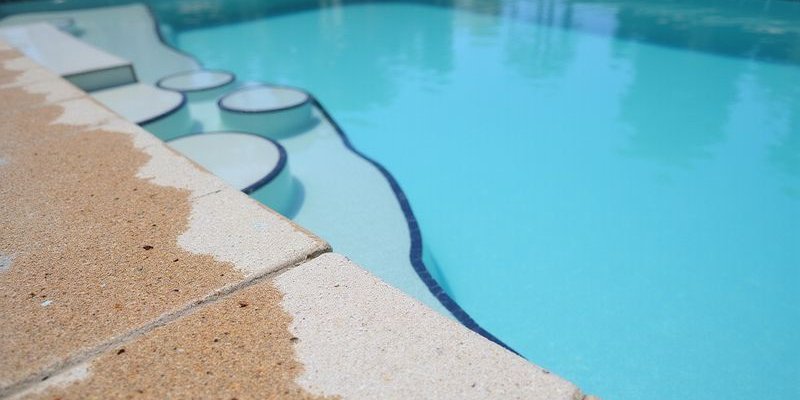
Surface cracks (Crazing): These look like fine spider webs or checking lines. They are generally cosmetic issues caused by temperature shifts or initial curing problems.
Structural cracks: These distinct fissures measure wider than a credit card and often run through the shell. We advise homeowners to take these seriously as they can leak water into the surrounding soil and destabilize the pool.
What to do:
- Hairline cracks: These are typically covered during a standard resurface.
- Wide cracks: These require hydraulic cement injection or staples before the new surface is applied.
4. Plaster Delamination (Hollow Spots)
Tap on your pool surface with a plastic tool or a golf ball. If you hear a solid “clack,” the bond is good; if you hear a hollow “thud,” you have delamination.
The “Calcium Nodule” Sign: We often see small white mounds that look like tiny volcanoes on the pool floor or walls. These “calcium nodules” form when water gets behind the plaster, dissolves calcium hydroxide, and pushes it out through a pinhole.
Why it matters:
- Hollow spots eventually crack and break off (pop-offs).
- Sharp edges can cause injury.
- Water trapped behind the surface accelerates shell degradation.
What to do: Small pop-offs can be patched temporarily. Widespread hollow sounds indicate the finish has separated from the shell and requires full removal.
5. Constant Algae Problems (Roots in the Surface)
This is the most frustrating sign for homeowners to manage. If you maintain perfect chemical balance but still fight algae blooms every week, your pool surface is likely the culprit.
The mechanism of failure: As plaster ages, it becomes pitted and porous. We know that black algae, in particular, anchors its roots deep into these pits where chlorine cannot penetrate.
The Cost of “Limped Along” Surfaces:
- Chemicals: Owners often spend an extra $600-$800 annually fighting blooms.
- Effort: Weekly brushing becomes a labor-intensive chore.
- Downtime: The pool is frequently unsafe for swimming.
What to do: Resurfacing provides a fresh, non-porous seal. This eliminates the hiding spots and allows your sanitizer to work effectively again.
6. Water Level Dropping (Beyond Evaporation)
Phoenix pools naturally lose water to our dry heat, but there is a limit. We typically see evaporation rates of 1/4 to 1/2 inch per day during the peak of summer.
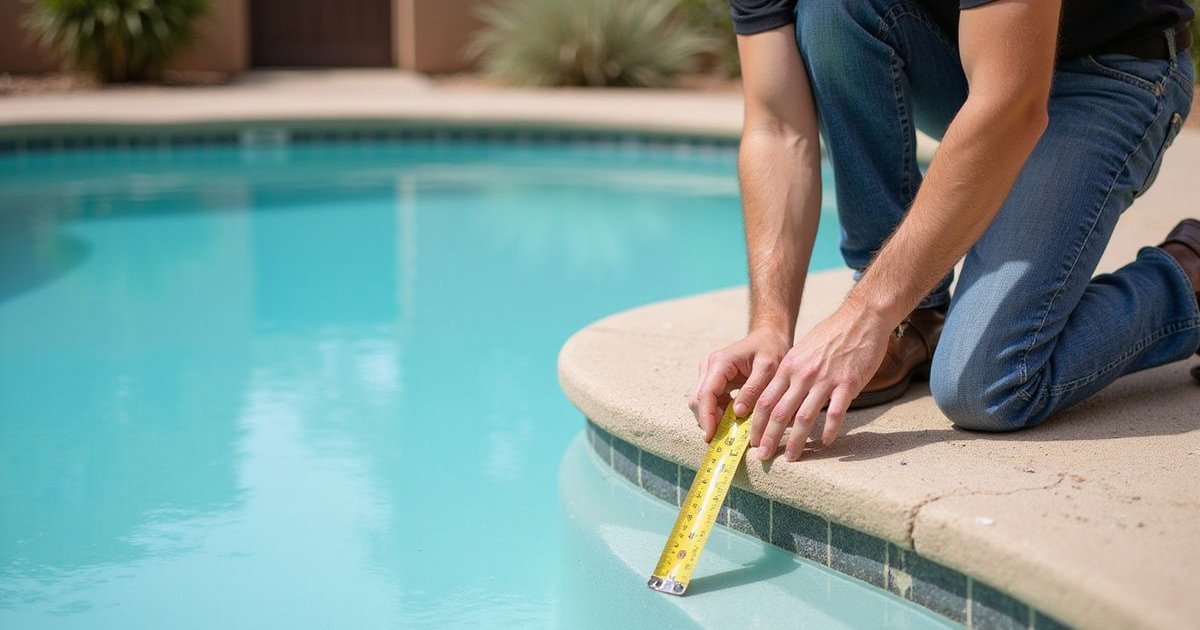
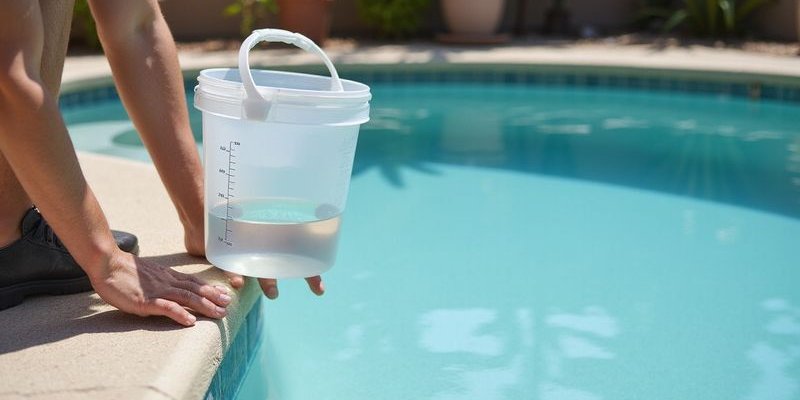
The Bucket Test Protocol: You can verify a leak with this simple 24-hour test:
- Fill the pool to its normal level.
- Place a 5-gallon bucket on the second step and fill it with water to match the pool’s water level.
- Mark the water level inside the bucket and on the outside of the bucket.
- Wait 24 hours without swimming or adding water.
The Results:
- Equal Drop: Evaporation is the cause.
- Pool Drop > Bucket Drop: You have a leak.
What to do: Schedule professional leak detection immediately. See our complete pool leak detection guide for step-by-step instructions. Leaks must be repaired before or during the resurfacing process to ensure the new finish cures properly.
7. Pool Is More Than 10 Years Old
Every pool finish has a finite lifespan, especially under the intense Arizona sun. We use these general timelines for local pools:
- White Plaster: 7-10 years
- Quartz Aggregate: 10-15 years
- Pebble Finishes: 15-20+ years
Learn more about finish durability in our guide on how long pool resurfacing lasts. If your pool exceeds these age ranges and displays any of the symptoms above, the material has likely lost its protective waterproofing abilities. Planning for a resurface now allows you to budget effectively rather than reacting to a failure.
The Cost of Waiting
Delaying necessary resurfacing often results in a higher final bill. We have tracked repair data showing that procrastination leads to specific financial consequences:
- Structural Damage: Water penetrating the shell can rust the steel rebar, causing it to expand and crack the concrete (oxide jacking).
- Chemical Waste: Porous surfaces consume 20-30% more chemicals to maintain sanitation.
- Inflation: Material costs for cement and aggregate continue to rise annually in 2026.
The Repair vs. Resurface Decision
You do not always need a full resurface. Spot repairs are a viable option in specific scenarios.
Choose Repair When:
- Damage is limited to one or two small areas.
- The surrounding plaster is still smooth and solid.
- You are fixing a specific leak or crack.
Choose Resurface When:
- Roughness is felt throughout the entire pool.
- You have patched the pool previously.
- Delamination is found in multiple distinct areas.
- You want to upgrade to a longer-lasting pebble finish.
How We Assess Your Pool
An accurate estimate requires more than a glance at the water. Our assessment process covers five critical health checks:
- Surface Porosity: We test how degraded the finish material has become.
- Acoustic Sounding: We listen for hollow spots that indicate delamination.
- Crack Classification: We determine if cracks are superficial or structural.
- Equipment Check: We verify that your pump and filter can support a new surface.
- History Review: We look at past repairs to understand the pool’s aging process.
You will receive a clear, data-backed report on the condition of your pool. This ensures you can make an educated decision based on facts rather than pressure.
Ready for a Professional Opinion?
Eliminate the guesswork regarding your pool’s condition. You can get a free, honest assessment from a team that has renovated thousands of Phoenix pools.
Schedule your free estimate and find out exactly what your pool needs.
Tags:
Ready to Transform Your Pool?
Get a free estimate from David Resurface today.