When to Replace Your Pool Pump: 5 Warning Signs
Is your pool pump making noise or losing pressure? Learn the 5 signs it's time to replace your pump before it fails completely.
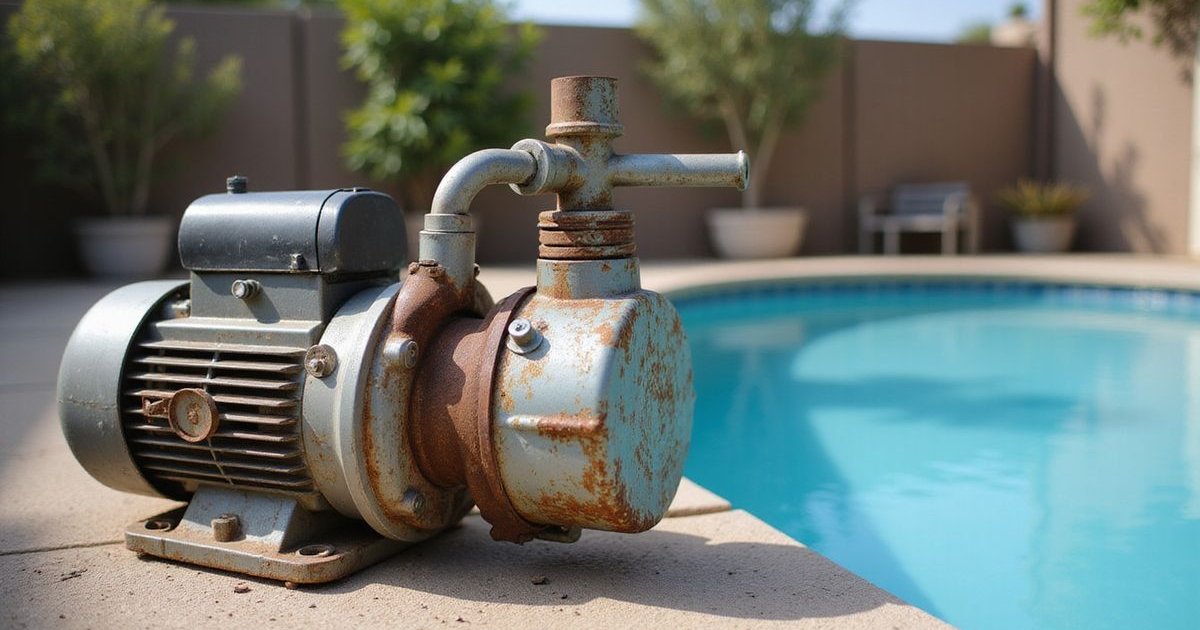
Your pool pump is the heart of your filtration system. When it fails, your pool quickly turns green and becomes unusable. The good news? Pumps usually give warning signs before complete failure.
Here are the 5 signs your pump is telling you it’s time for a replacement. For professional pump installation and repair, see our pool equipment services.
Sign #1: Unusual Noises
A healthy pump hums quietly. In our experience servicing pools across the Valley, any new noise is a direct cry for help.
Grinding or Squealing
What it means: The motor bearings are failing. Inside the motor, metal-on-metal contact creates friction and intense heat.
How long you have: You likely have days, not weeks. Once the “screech of death” begins, the bearings will eventually disintegrate and cause the motor to seize completely.
Temporary fix: There is no reliable temporary fix. We often see homeowners try to lubricate sealed bearings, but this rarely works and operating a failing pump only speeds up the damage to other components.
Loud Humming (No Flow)
What it means: The motor is trying to start but cannot turn. This is usually one of two things: a bad capacitor (which is a cheap repair) or a seized motor shaft (which often requires replacement).
How long you have: The pump is already non-functional.
Cavitation (Grinding/Gurgling)
What it means: Your pump is starving for water. It sounds like shaking a can of rocks. While this can indicate a simple blockage or low water level, persistent cavitation often points to a worn impeller or a suction-side leak that is destroying the pump’s hydraulics.
Action: Check your skimmer baskets and water level first. If those are clear, the problem is likely internal.
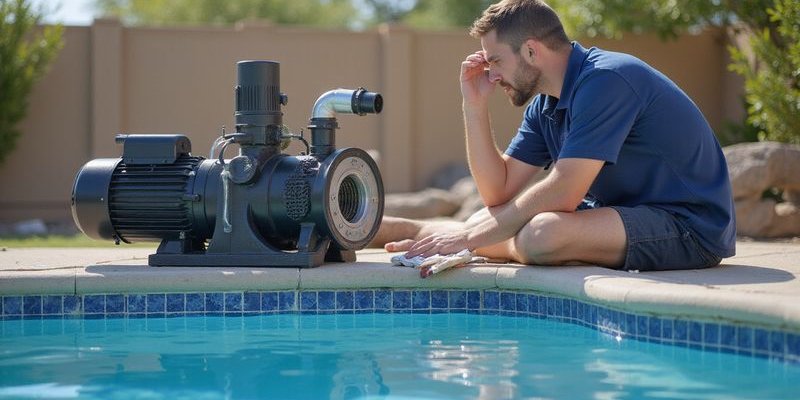
Sign #2: Loss of Prime (Won’t Hold Water)
A pump that won’t stay primed has a leak or worn seals. Dealing with the dry Arizona heat, we frequently see O-rings and seals dry rot faster than in other parts of the country.
What “Losing Prime” Looks Like
- Air bubbles shooting out of return jets.
- The pump basket never fills completely with water.
- You must manually fill the basket with a hose to get it started.
- Visible water pooling around the base of the pump.
Common Causes
- Shaft Seal Failure: This is the most common issue we encounter. The seal between the wet end and the motor fails, allowing water to leak and damage the motor bearings.
- Lid O-ring Deterioration: Dry, cracked rubber allows air to be sucked in.
- Suction Line Air Leak: PVC joints can crack under thermal expansion.
- Cracked Pump Housing: Intense UV exposure can make the composite housing brittle.
Repair or Replace?
Repair makes sense if:
- The pump is under 5 years old.
- Only the shaft seal or O-ring has failed.
- The motor runs quietly once primed.
- Total repair costs are under $200.
Replace when:
- The housing itself is cracked (these are difficult and risky to patch).
- Multiple seals are failing simultaneously.
- The pump is over 8 years old.
- The repair estimate exceeds 50% of the cost of a new, modern pump.
Sign #3: Reduced Flow or Pressure
When your pump isn’t moving water like it used to, filtration suffers. You might notice your automatic cleaner is sluggish or the water clarity is dropping.
Signs of Reduced Flow
- Weak pressure at the return jets.
- The pool takes significantly longer to filter clear after a storm.
- Suction cleaners get stuck or move slowly.
- Water features like waterfalls lack their usual power.
The “Filter Fake-Out”
Before you blame the pump, check your filter. A dirty or old filter is the number one cause of low flow. We always recommend backwashing or cleaning cartridges before diagnosing the pump.
Testing Flow
Try this simple test: time how long it takes to fill a 5-gallon bucket from a return line. Compare this to the manufacturer’s flow specs for your specific model.
Worn impeller = new pump. On older pumps, the impeller vanes can wear down from grit and sand. Replacing just the impeller often reveals other age-related issues, so a full replacement is usually the smarter financial move.
Sign #4: Frequent Cycling or Tripping Breaker
Electrical problems are serious and can be dangerous. If your pump is tripping the breaker or shutting itself off, it is a major red flag.
Pump Keeps Shutting Off
Thermal overload: The motor is overheating. This is incredibly common in Phoenix summers when ambient temps hit 110°F+.
The Touch Test: Carefully place your hand on the motor (not the hot metal, but the housing). It will be hot, but you should be able to touch it for a second without being burned. If it is scorching hot to the touch, the internal thermal switch is tripping to save the motor.
Breaker Trips When Pump Starts
What it means: The motor is drawing too much current (amps).
- Capacitor Failure: A relatively easy fix if caught early.
- Shorting Windings: The insulation inside the motor has melted. This is a “replace immediately” scenario.
- Seized Bearings: The physical resistance is spiking the amp draw.
Safety note: Do not keep resetting the breaker. Repeatedly forcing a compromised motor to start can cause electrical fires or damage your home’s main panel.
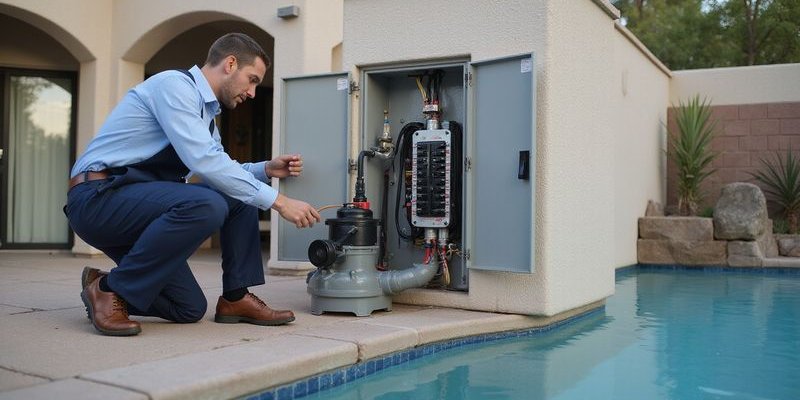
Sign #5: Visible Deterioration
Physical damage often indicates internal problems too. Our harsh UV index degrades equipment faster than national averages suggest.
What to Look For
Rust and Corrosion:
- Look for white, crusty mineral deposits (calcium) on the seal plate. This indicates a long-term slow leak.
- Rust on the motor housing suggests water has already penetrated the electrical compartment.
Cracks and Sun Damage:
- “Fiberglass Bloom”: If you rub the pump housing and it leaves a chalky residue on your hand, the plastic is degrading.
- Hairline cracks in the strainer basket lid.
Age-Related Wear
Even without obvious problems, pumps have a finite lifespan.
- Single-speed pumps: Typically last 8-12 years.
- Variable-speed pumps: Typically last 10-15 years due to lower running speeds.
If your pump is in this age range and showing any symptoms, replacement is likely the smart move.
Repair vs. Replace: The Decision Matrix
Making the right financial choice depends on age and cost. We use this matrix to help customers decide.
| Situation | Recommendation |
|---|---|
| Minor seal leak, pump under 5 years | Repair |
| Capacitor failure, motor otherwise good | Repair |
| Bearing noise, pump under 3 years | Maybe repair |
| Multiple issues, pump 5+ years | Replace |
| Any motor failure, pump 8+ years | Replace |
| Cracked housing or major corrosion | Replace |
The Upgrade Opportunity
If you are replacing your pump, you likely won’t be installing the same old model.
The DOE Regulation Factor: Since 2021, federal Department of Energy regulations have effectively banned the manufacturing of most single-speed pumps over 1 horsepower. This means for most pools, a Variable Speed Pump (VSP) is now the standard requirement, not just an option.
Learn more about the benefits in our guide on variable speed pool pump benefits.
Benefits of Variable Speed:
- Energy Savings: They can reduce energy use by 50-90% by running at lower speeds for longer periods.
- Quiet Operation: At low speeds, they are virtually silent.
- Better Filtration: Slower water movement actually allows your filter to trap smaller particles more effectively.
Rebate Reality Check: Historically, utilities like SRP and APS offered rebates for these upgrades. However, programs change annually and some have been discontinued as VSPs became mandatory. We recommend checking your specific utility provider’s current rebate portal before purchasing.
Don’t Wait for Complete Failure
A pump that dies suddenly in July creates a crisis.
- No filtration: In our climate, a stagnant pool turns green in as little as 24-48 hours.
- Premium pricing: Emergency service calls often cost more than scheduled work.
- Limited options: You are forced to buy whatever is in stock rather than the best pump for your specific pool.
Proactive replacement allows you to schedule the work at your convenience and often secure better pricing.
The Bottom Line
If your pump shows any of these warning signs and is over 5 years old, it is time to start planning. Ignoring the noise or the leak usually ends with a green pool and a more expensive bill.
Not sure about your pump’s condition? Contact us for a free assessment. We’ll tell you honestly whether repair or replacement makes sense for your situation.
Tags:
Ready to Transform Your Pool?
Get a free estimate from David Resurface today.